China exhibits new land equipment at Zhuhai
On the left is the SLC-7 L-band air defence radar, and on the right the YLC-8E UHF anti-stealth air defence radar. (Chinese Internet)
China shows little sign of slowing the quantity of new equipment for the PLA and for export markets.


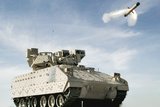
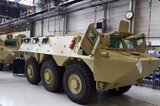
New radar, air defence systems and armoured vehicles were among the equipment displayed at the ongoing 13th edition of the China International Aviation and Aerospace Exhibition in Zhuhai, Guangdong Province.
Displayed outside on the tarmac were radars from the China Electronics Technology Group Corporation’s (CETC) 14th Institute. These included the Lingdong family: the YLC-8E UHF anti-stealth air defence radar; the trailer-mounted SLC-7 L-band multifunctional air defence radar; the SLC-12 S-band alert radar; and the YLC-12 C-band medium- and low-altitude multifunctional radar.
Together, these digitised radars cover the UHF, L, S and C bands. They can network with each other and
Our news & analysis is now part of Defence Insight®
A Basic-level or higher Defence Insight subscription is now required to view this content.




More from Land Warfare
-
![AUSA 2026: companies adapt munitions and missiles for greater effect at lower costs]()
AUSA 2026: companies adapt munitions and missiles for greater effect at lower costs
Rather than developing entirely new weapons, defence companies are looking to build on existing weapons and systems to deliver greater capability, control costs and accelerate fielding.
-
![AUSA 2026: industry looks to make commercial platforms a military reality]()
AUSA 2026: industry looks to make commercial platforms a military reality
With a production rate of more than 10 million vehicles annually, the US commercial car and vehicle manufacturing base is second only to China. Defence companies are looking at how the vehicles, technology and manufacturing capability can support programmes.
-
![With changing patterns in Middle Eastern procurement, is Europe missing out?]()
With changing patterns in Middle Eastern procurement, is Europe missing out?
Traditional suppliers are struggling to meet the Middle East’s armoured vehicle modernisation needs, creating opportunities for South Korean manufacturers and regional defence industries.
-
![AUSA 2026: CUAS market expands as suppliers target new threats and operational requirements]()
AUSA 2026: CUAS market expands as suppliers target new threats and operational requirements
New developments from MARSS, MyDefence, Mountain Horse Solutions and Rafael suggest that future counter-drone protection will increasingly depend on combining advanced detection, rapid interception and integrated defensive networks.